
Introduction
In industrial operations, a damaged or worn part represents not only a technical problem but also a potential production disruption. When this occurs, one of the most important decisions is whether to repair the component or replace it with a new one.
Although in some cases replacement may seem like the most straightforward option, the reality is that repair is often a more cost-effective, time-efficient, and readily available alternative, especially when dealing with critical or hard-to-obtain components.
Key factors in making the decision
1. Delivery time
One of the most important factors is time.
Replacing a part can involve:
- Long manufacturing times
- Imported from another country
- Limited stock availability
In contrast, a well-executed repair can return the part to operation in much less time, which directly translates into less downtime in the plant.
2. Total cost
The cost should not only be evaluated based on the price of the part, but also considering:
- Production stoppage
- Impact on deliveries
- Indirect costs
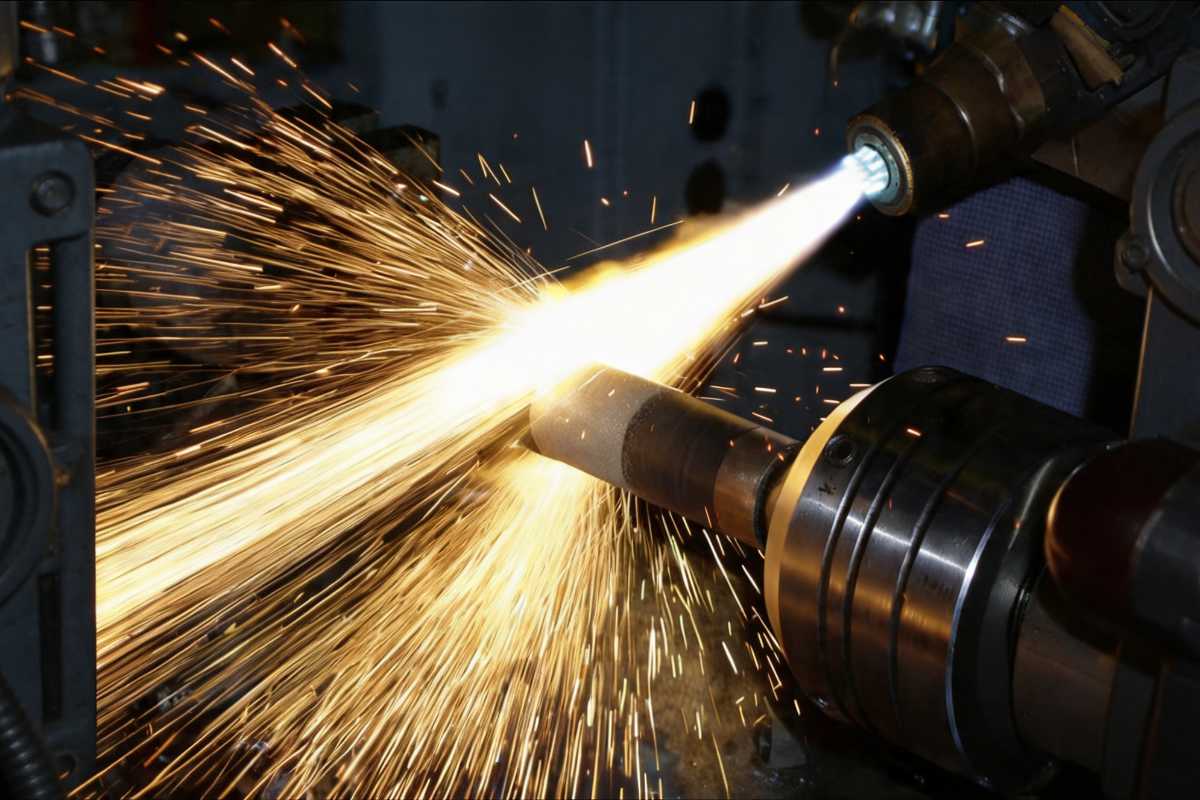
In many cases, repairing through processes such as metallizing, welding, and machining is more economical than manufacturing or acquiring a new part, especially for large or complex components.
3. Part availability
There are many scenarios where replacement is not an immediate option:
- Discontinued parts
- Outdated machinery
- Suppliers with long lead times
- Inventory shortages
In these cases, repair or reverse engineering becomes the only viable solution to restore operation.
4. Damage type
Not all damaged parts need to be replaced.
Many components can be salvaged when they exhibit:
- Surface wear
- Material loss
- Localized damage
- Controllable deformations
Processes such as metallizing allow dimensions to be restored, while machining ensures the final adjustment necessary for its operation.
5. Component function
When it comes to critical components, the priority is to restore operations as quickly as possible.
In these cases, repair offers a significant advantage:
- Shorter response time
- Greater control over the process
- Immediate solution to get the team back up and running
When is it advisable to replace?
- Severe or irreparable structural damage
- Materials that have completely lost their properties
- Low-cost, high-availability parts
- Specific requirements that demand a new component
While repair is an excellent option, there are cases where replacement might be more convenient:
The key is to conduct a proper technical evaluation before making the decision.
The value of a well-executed repair
An industrial repair is not a "temporary fix."
When done correctly, it can:
- Restore component functionality
- Extend part life
- Maintain equipment performance
- Reduce operating costs
At MYMMSA, parts repair is carried out through the integration of processes such as:
- Metallization
- Welding
- CNC and conventional machining
- Reverse engineering
- Quality control and traceability
This allows us to offer complete solutions, tailored to each type of component and operating condition.
Conclusion
Deciding between repairing or replacing a piece of machinery isn't always straightforward, but in many cases, repair is a faster, more cost-effective, and more viable option, especially when dealing with critical or hard-to-find components.
Having a supplier with technical expertise and the ability to integrate different processes makes a significant difference when evaluating and implementing the best solution.
If you have a damaged or worn part and aren't sure what the best option is, at MYMMSA we can help you assess it and propose a reliable solution for repairing or remanufacturing it, with a focus on quality, functionality, and turnaround times.